· 2 min read
Pick to Light + Vision + AI: Smarter Warehouses.
As warehouses evolve towards Industry 4.0, the combination of pick-to-light systems, advanced computer vision, and autonomous AI is transforming traditional manual operations into highly automated, intelligent workflows — reducing errors, accelerating fulfilment, and scaling without proportional headcount increases.
The three-way integration driving warehouse intelligence
No single technology delivers a truly intelligent warehouse. It is the combination of light-based operator guidance, visual verification, and autonomous AI decision-making that closes the loop — from the moment an order arrives to the moment the right item is confirmed picked and packed.
- 01
Pick-to-Light
LED indicators direct operators to the exact bin — zero search time, zero wrong-location picks
- 02
Vision Systems
Cameras verify the correct item was picked — catching errors before they reach packaging
- 03
Autonomous AI
AI optimises pick routes, manages exceptions, and continuously improves warehouse performance
What vision systems do in warehouse operations
Vision systems use cameras and computer vision algorithms to monitor, inspect, and verify goods and activities in real time. When integrated with pick-to-light, they close the loop between guidance and confirmation — ensuring every pick is not just directed, but verified.
- 01
Real-time item verification
Cameras confirm the correct product was picked before it moves to packaging — preventing costly errors from reaching customers.
- 02
Automated quality inspection
Visual inspection identifies damaged or mislabelled items instantly — stopping defective products before they are shipped.
- 03
Inventory tracking without manual scanning
Vision enables accurate real-time tracking of goods’ locations and movements across the warehouse — without operator scanning at every step.
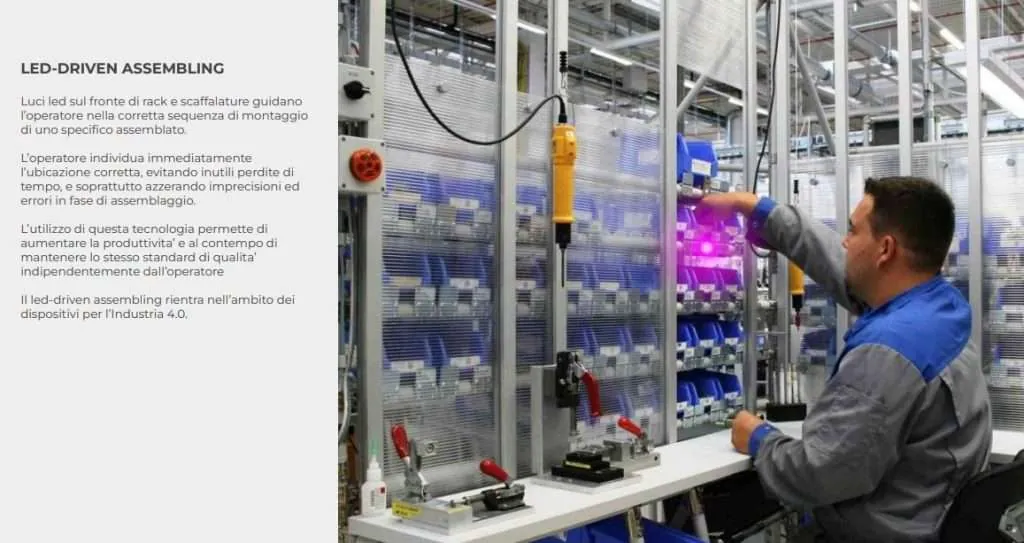
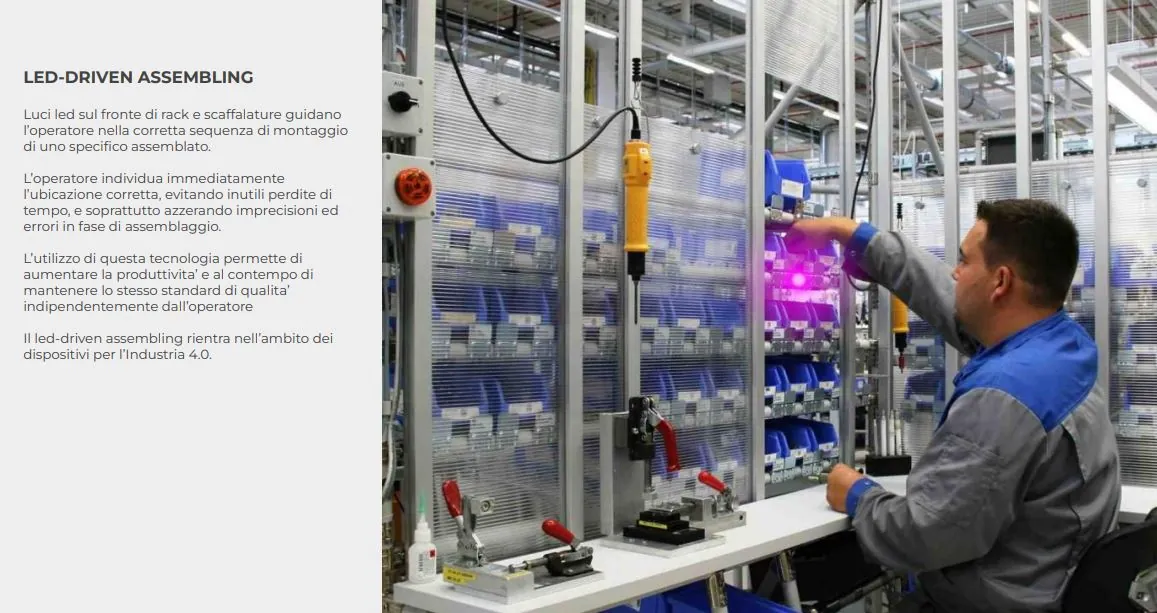
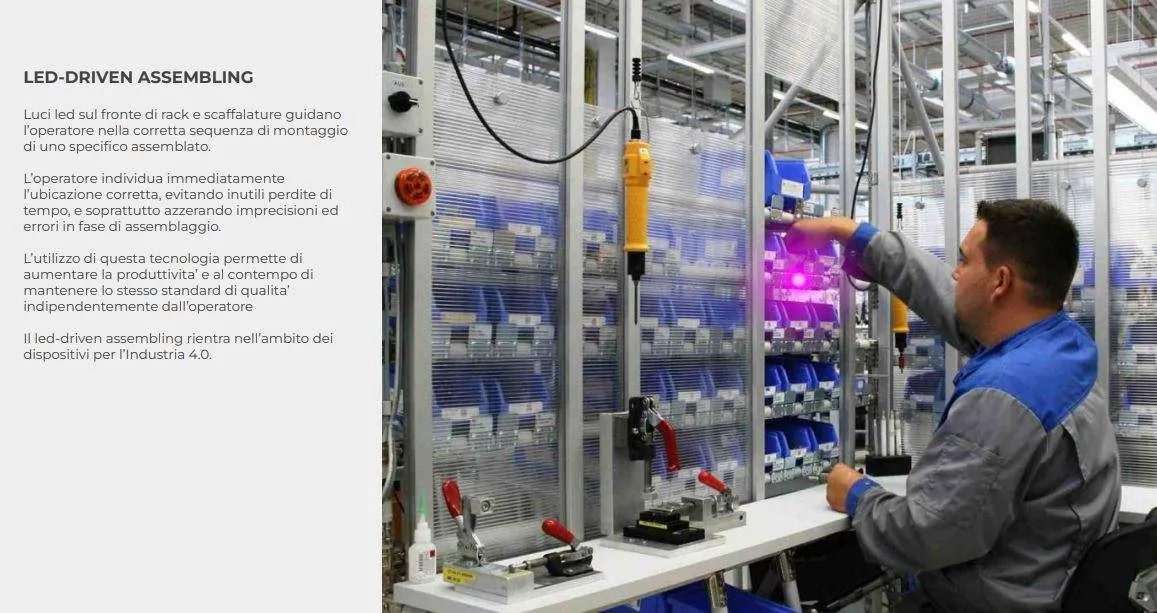
Integrated pick-to-light and vision system — LED guides the operator to the correct location while the camera verifies the pick before the next step is unlocked.
What autonomous AI adds to the system
Unlike simple rule-based automation, autonomous AI makes decisions, adapts dynamically, and learns from operational data. In a warehouse context this means the system gets smarter every day — not just executing instructions, but optimising the entire fulfilment process continuously.
Complex data analysis — processing data from vision systems, sensors, and WMS simultaneously
Dynamic workflow adaptation — optimising pick routes, replenishing stock proactively, responding to unexpected events
Autonomous problem solving — detecting bottlenecks and reallocating resources without human intervention
Continuous improvement — learning from operational data to improve efficiency and accuracy over time
Benefits of the combined system
Enhanced accuracy and speed — visual verification and intelligent guidance reduce errors while accelerating picking
Autonomous exception management — AI detects and resolves bottlenecks without waiting for human input
Scalable intelligence — the system grows smarter as it collects more operational data
Faster operator onboarding — visual guidance enables new staff to pick correctly from day one
- 01
Key capabilities
Pick verification Real-time Error detection Before packing Route optimisation Autonomous Learning Continuous Deployment 1 day
- 02
Related guides
Vision & Pick-to-Light: supply chain AI Copilot for assembly Pricing plans
Related reading
More guides on AI-powered warehouse and logistics operations.
Guide · Logistics Vision Systems & Pick-to-Light: Supply Chain AI Read more
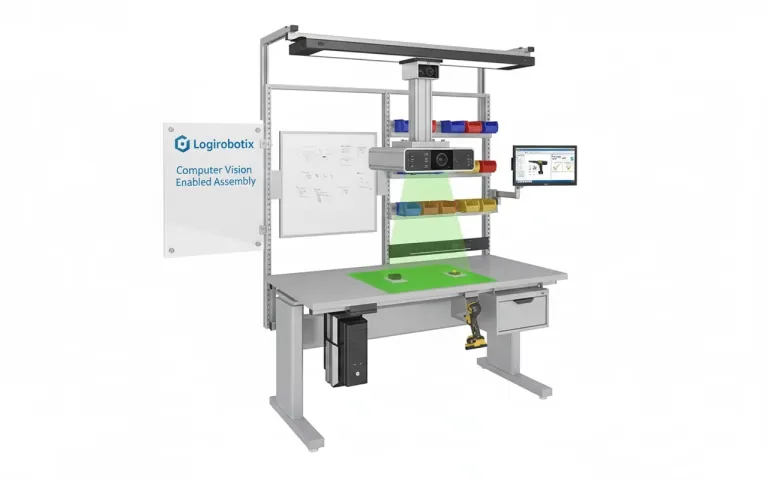
Case Study · Assembly AI Copilot for Manual Assembly Read more
Case Study · Smart City Computer Vision for Smart Cities Read more