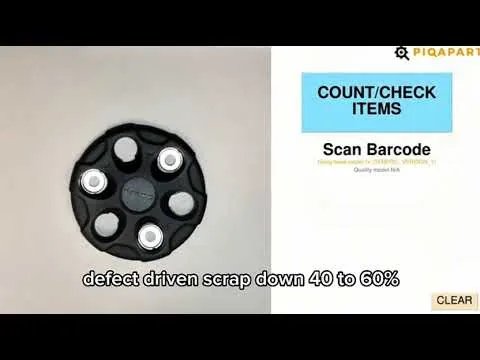
· 2 min read
Vision Systems for Manual Assembly Quality Control.
AI vision systems for manual assembly go beyond passive inspection — they recognise components, verify each assembly step, signal errors in real time, and guide operators through complex sequences with zero ambiguity.
What is a vision-assisted assembly system?
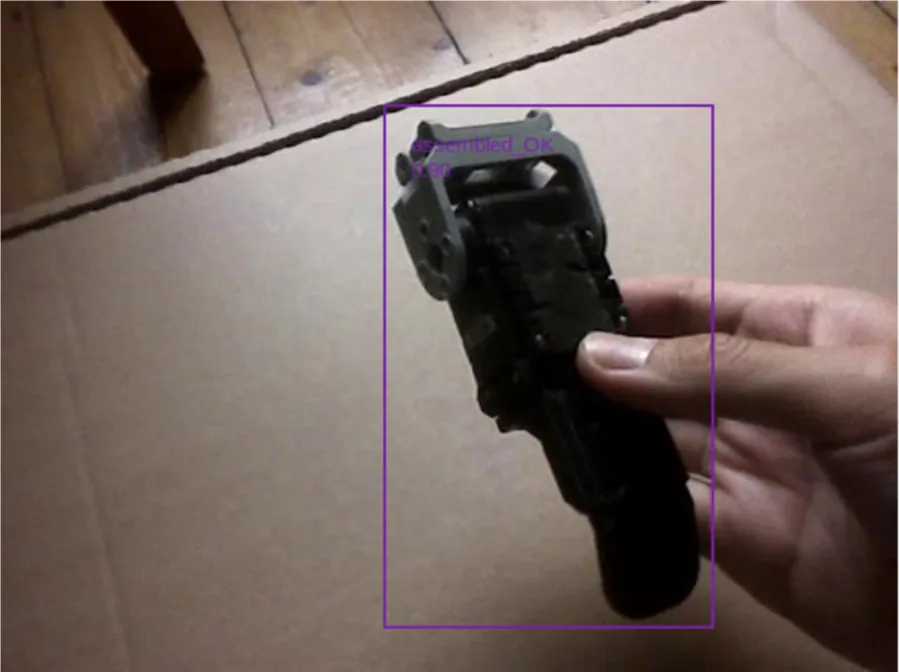
A vision-assisted assembly system combines industrial cameras, structured lighting, and intelligent software to support operators through every step of a manual assembly process. Unlike automated inspection that only checks finished products, these systems work alongside the operator in real time — recognising components, verifying each action, and preventing errors before they happen rather than catching them after.
- 01
Component recognition
Identifies the correct part to use at each step — detecting wrong components, incorrect variants, or missing items before the operator proceeds.
- 02
Assembly sequence verification
Confirms each step is completed in the correct order — preventing skipped operations, out-of-sequence assembly, and the defects they cause downstream.
- 03
Real-time error signalling
Alerts the operator instantly when a component is missing, incorrectly positioned, or the wrong part — before the next step can proceed.
- 04
Operator guidance on screen
Visual instructions, next-step prompts, and feedback displayed on HMI or tablet — reducing cognitive load and onboarding time for new operators.
Types of quality controls performed
| Control type | What it verifies |
|---|---|
| Presence / absence | All required components are present before proceeding to the next step |
| Correct orientation | Parts are installed in the right position and direction |
| Assembly sequence | Steps are completed in the correct order — no skips, no reversals |
| Visual defects | Scratches, deformations, cracks, or surface damage on components |
| Dimensional conformance | Thickness, distances, and alignments within specified tolerances |
| Code reading | OCR/OCV for labels, serial numbers, batch codes, and expiry dates |
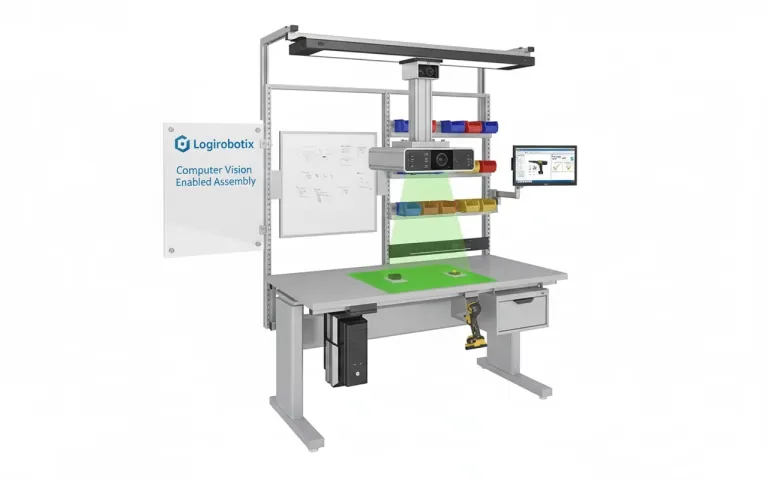
AI vision system guiding a manual assembly operator — verifying each component placement and alerting instantly when something is wrong before the next step unlocks.
Integration with the production process
- 01
Standalone workstations
Ideal for manual assembly benches — self-contained, plug-and-play, no IT infrastructure required
- 02
HMI interface
Touch screen or tablet for direct operator interaction — visual feedback, step guidance, and error alerts
- 03
Industry 4.0 connectivity
Data collection, MES/ERP integration, real-time analytics, and predictive maintenance compatibility
Specific capabilities for manual assembly
Visual part recognition — identifies the correct component from a set, including variants, sizes, and colours
Gesture recognition — detects operator hand movements to confirm actions were performed correctly
Traceability logging — records every assembly step digitally for audit, compliance, and continuous improvement
Multi-variant support — handles different product configurations on the same line without manual reconfiguration
Monthly subscription model — software updates, technical support, and scalability included — no upfront CAPEX
Industry 4.0 eligible — qualifies for Italian tax incentives under Industria 4.0 / Transizione 5.0
Operational benefits
Reduced human error — errors caught at the step where they occur, not at end-of-line inspection
Higher productivity and quality — operators work faster with confidence, not slower with uncertainty
Simplified onboarding — new operators productive from day one with step-by-step visual guidance
Automatic process documentation — full digital record of every assembly without manual data entry
- 01
Key metrics
Defect reduction −35% Rework reduction −60% Onboarding speed +50% Throughput +20% Deployment 1 day Experts needed None
- 02
Controls covered
Presence / absence Orientation Sequence Visual defects Dimensions Code reading
- 03
Related
Related reading
More guides on AI-assisted assembly and quality control.
Solution · Assembly AI Copilot for Manual Assembly See the solution
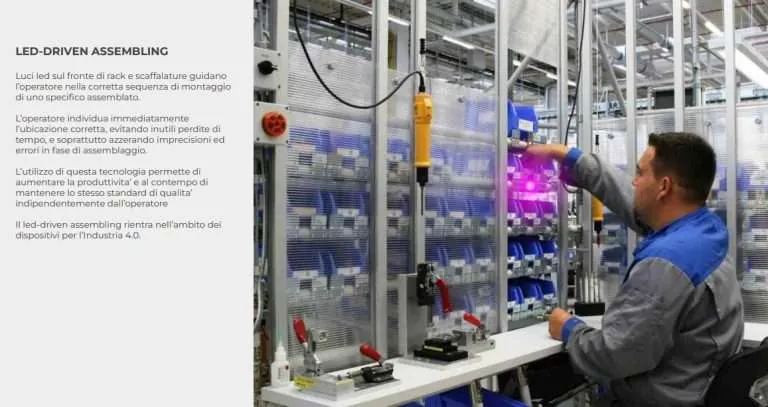
Guide · Logistics Pick to Light + Vision + AI: Smarter Warehouses Read more
Guide · Robotics
Computer Vision, AI & Robotics: The New Automation
Read more