· 3 min read
Data Intelligence, Computer Vision & Boosting OEE.
Achieving maximum efficiency, quality, and compliance in manufacturing is no longer optional. The integration of data intelligence, computer vision, and autonomous AI is transforming production lines — delivering higher OEE and consistent product quality through a self-optimising continuous improvement cycle.
Data intelligence: turning production data into action
Manufacturers generate vast amounts of data every day — from production speeds and cycle times to quality metrics and machine states. Without the ability to collect, connect, and act on this data, it remains a missed opportunity. Data intelligence aggregates information from across the production chain and turns it into decisions that improve OEE in real time.
- 01
Real-time bottleneck identification
Spotting inefficiencies as they emerge — before they cascade into production losses or quality failures that are expensive to correct downstream.
- 02
Root cause analysis of recurring problems
Connecting quality defects across batches to identify patterns — pinpointing the upstream process variables that cause recurring failures.
- 03
Workflow optimisation for maximum throughput
Using production data to continuously tune machine parameters, scheduling, and resource allocation — improving output without adding capacity.
Computer vision: the eyes of the factory
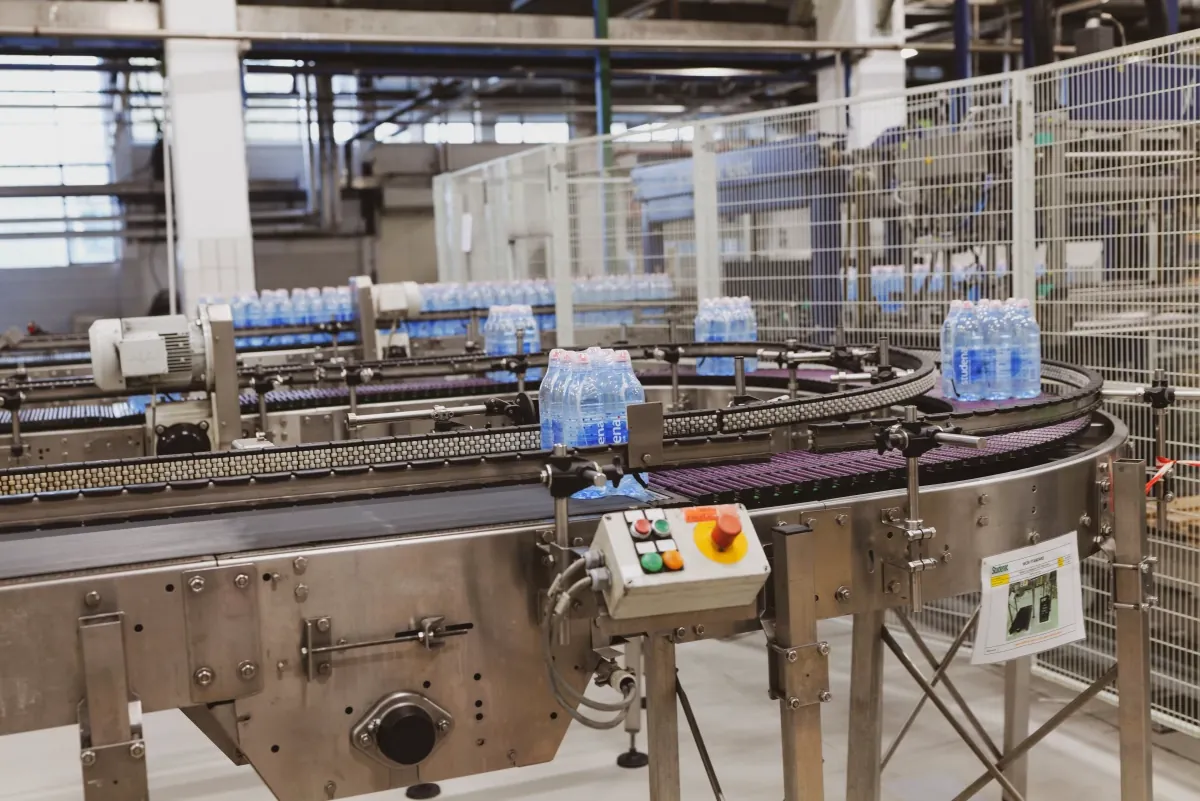
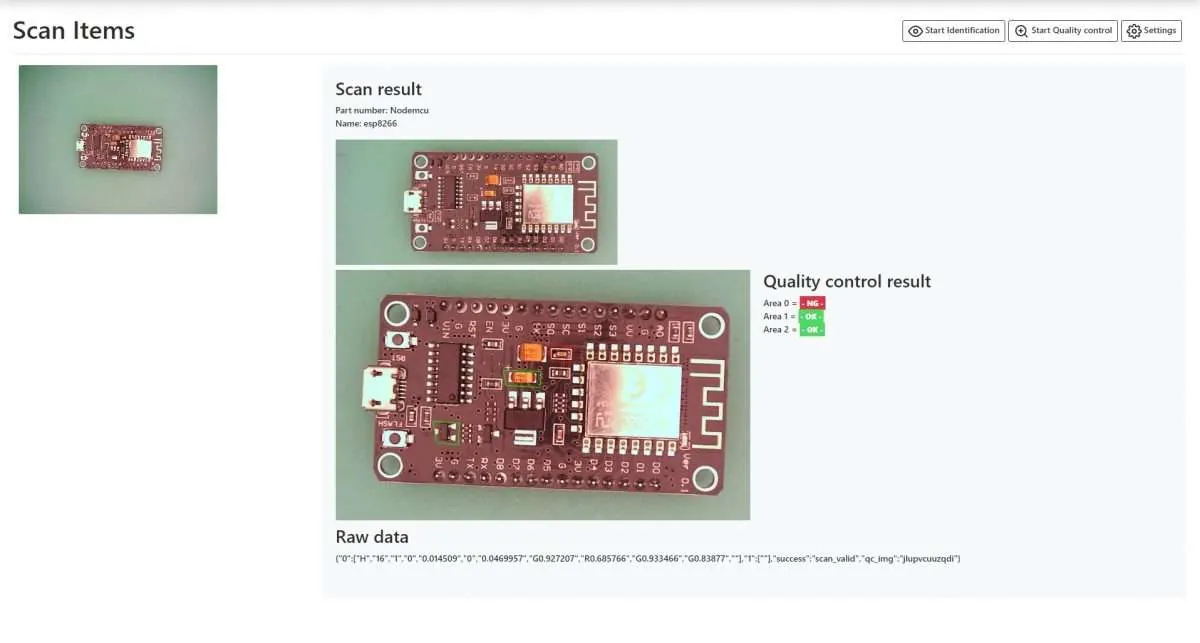
Computer vision uses high-resolution cameras and AI algorithms to inspect products, components, and packaging in real time. These systems detect defects too small or too fast for human inspection — at production speed, without creating bottlenecks.
100% inline inspection — every unit assessed without slowing the production line
Immediate rejection — defective items removed at the point of detection, not at end-of-line
Data feedback loops — inspection results feeding back to improve upstream process parameters
Objective consistency — same standard applied to every unit across all shifts
OEE: measuring and driving efficiency
Overall Equipment Effectiveness is the gold standard for measuring manufacturing health — combining three dimensions into a single operational metric. Integrating computer vision data directly into OEE tracking enables precise measurement of quality losses and dramatically faster corrective actions.
- Availability Minimising unplanned downtime — predictive maintenance triggered before failure
- 1
- Availability Minimising unplanned downtime — predictive maintenance triggered before failure
- Performance Maintaining optimal production speed — detecting slow cycles and micro-stops in real time
- 2
- Performance Maintaining optimal production speed — detecting slow cycles and micro-stops in real time
- Quality Reducing defects and rework — vision data quantifying quality losses precisely
- 3
- Quality Reducing defects and rework — vision data quantifying quality losses precisely
Computer vision integrated directly into a production line — defect detection data flowing in real time into OEE dashboards and autonomous AI for immediate corrective action.
Autonomous AI: from insight to self-optimisation
Traditional AI detects patterns. Autonomous AI acts on them — without waiting for human intervention. In a manufacturing context, this transforms OEE improvement from a manual, reactive process into a self-optimising continuous improvement cycle that runs 24 hours a day.
- 01
Automatic machine parameter adjustment
AI adjusting process variables based on real-time inspection data — correcting before defects propagate, not after they are discovered.
- 02
Predictive maintenance scheduling
Triggering maintenance based on actual machine condition — not fixed schedules — preventing unplanned downtime before it occurs.
- 03
Dynamic resource reallocation
Redistributing production tasks autonomously to avoid slowdowns — responding to capacity changes, quality deviations, and machine states in real time.
The combined impact
Higher OEE — availability, performance, and quality all improving through a single integrated system
Consistent product quality — 100% automated inspection with data feedback into production
Reduced downtime — predictive maintenance replacing reactive repair
Self-optimising operations — continuous improvement running without manual intervention
- 01
OEE components
Availability Uptime Performance Speed Quality Defects Vision coverage 100% Optimisation Autonomous Deployment 1 day
- 02
Related guides
Connected machines & OEE Data science in manufacturing AI quality control
Related reading
More guides on data intelligence, AI, and smart manufacturing.
Guide · Industry 4.0
Connected Machines, AI & Computer Vision: Unlocking True OEE
Read more
Guide · Data Science
Data Science & AI: The New Engine of Manufacturing
Read more
Case Study · Electronics Computer Vision for Micro Components & PCBs Read more