AI Vision for Injection Molding
Real-time defect detection, 99%+ accuracy, 40–60% scrap reduction. Deploy AI-powered quality control on your molding lines in days, not months.
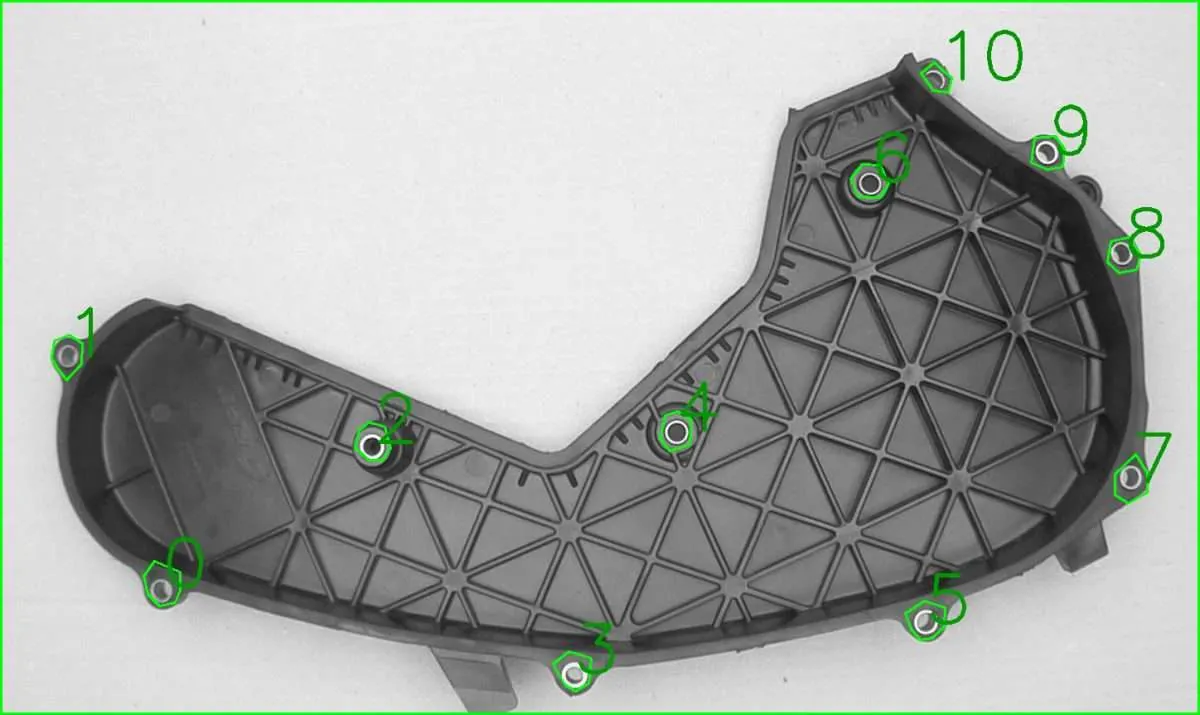
- Defect Detection Accuracy
- 99%+
- Defect Detection Accuracy
- Scrap Reduction
- −60%
- Scrap Reduction
- Average Deployment
- 1 day
- Average Deployment
- ROI Timeline
- 3–4 mo
- ROI Timeline
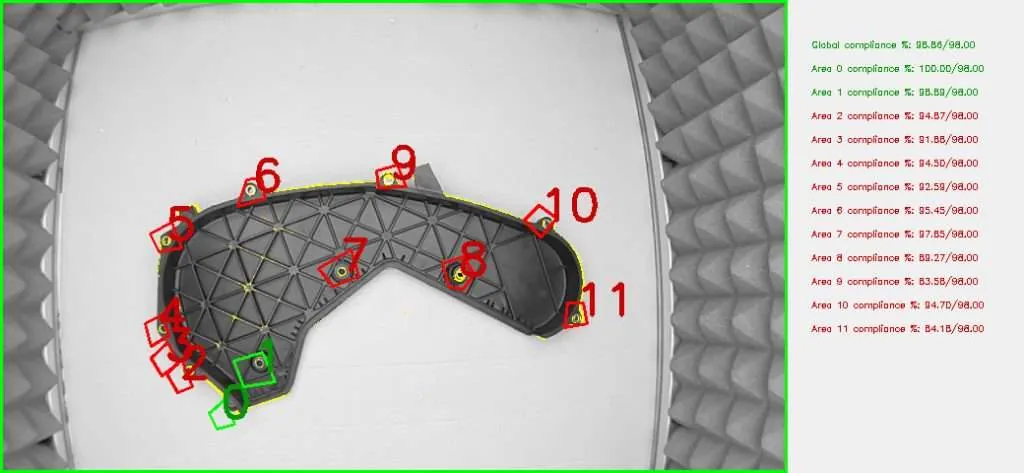
Injection Molding Quality Control: The Challenge
Injection molding plants produce hundreds of parts per hour. Every minute a defective part goes undetected, you’re losing money: scrap costs, rework labor, customer complaints, and potential recalls.
Manual visual inspection doesn’t scale. Inspectors fatigue. Parts are missed. A 100-cavity mold running 300 cycles/hour produces 30,000 parts daily—no human team can catch every defect. And even with multiple inspectors, defect detection rates plateau at 70–85%.
AI vision changes the equation. Computer vision systems see every part, every cycle, 24/7. They detect defects humans miss: gate area sprue marks, flash at parting lines, sink marks, dimensional drift, color inconsistency, missing inserts. And they do it in real time.
Common Defects AI Vision Detects in Injection Molding
- 01
Gate & Sprue Issues
Detects incomplete gate fill, sprue gate remnants, flash at gate area with ±0.2mm tolerance.
- 02
Sink Marks & Surface Defects
Identifies sink marks, flow lines, surface cracks, and cosmetic defects on part surface.
- 03
Dimensional Drift
Monitors part dimensions in real-time; alerts operators to tooling wear or parameter drift before scrap escalates.
- 04
Parting Line Flash
Real-time detection of flash at parting lines, mold separation witness marks, and burrs.
- 05
Color & Material Consistency
Verifies part color, material consistency, and color match against reference samples.
- 06
Voids, Bubbles & Weld Lines
Detects air pockets, gas bubbles, weld lines, and subsurface voids with high-speed imaging.
How AI Vision Systems Work for Injection Molding
1. Image Capture
High-speed cameras (300+ fps) photograph each part immediately after ejection or at in-cavity inspection points. Multiple angles capture top, bottom, and edge details.
2. AI Analysis
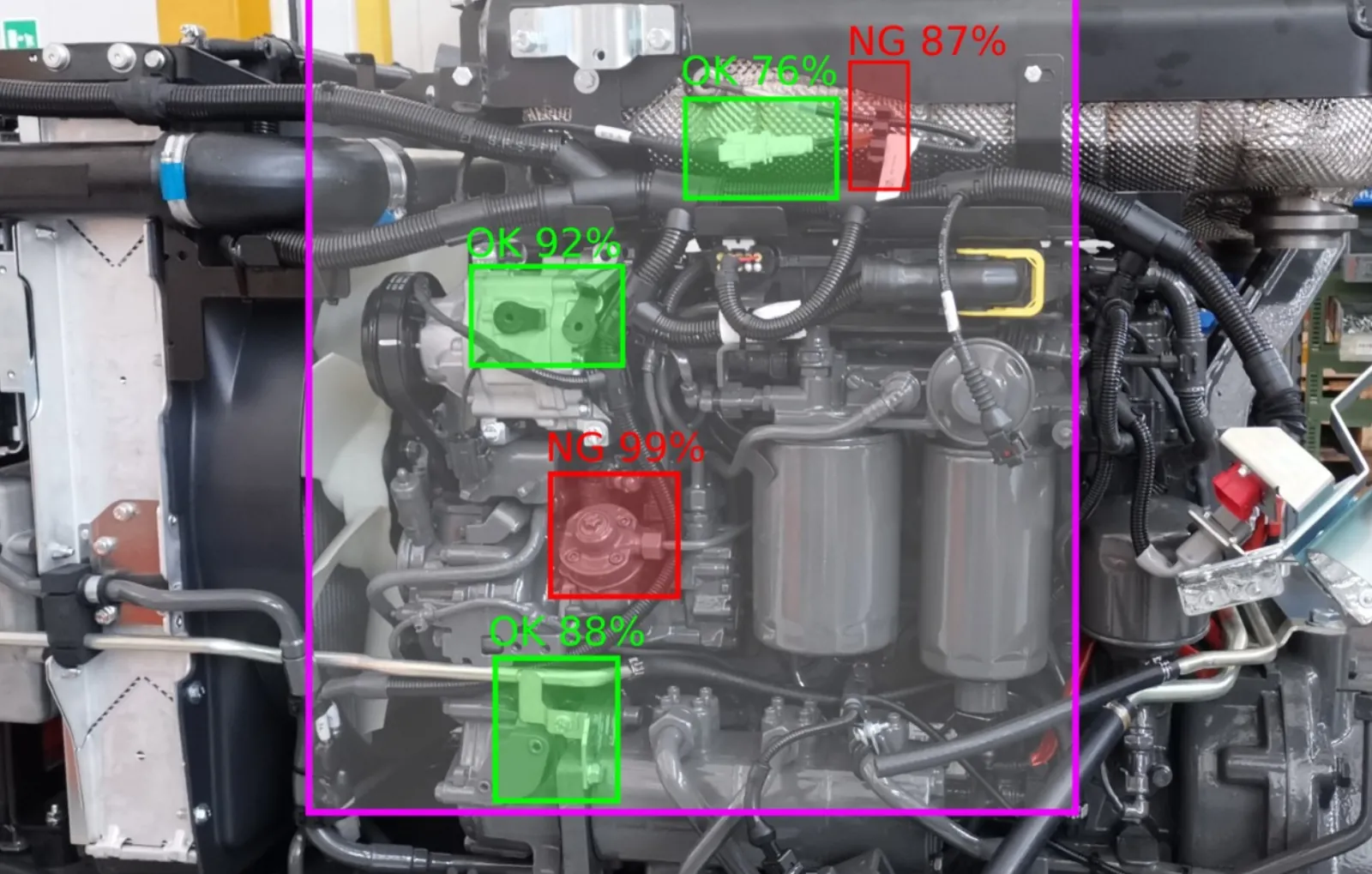
Pre-trained models (trained on thousands of good + defective parts) analyze images in real-time. System identifies anomalies and compares part against reference geometry and thresholds.
3. Decision & Action
System classifies part as PASS or FAIL in milliseconds. Good parts move downstream; defects are diverted to scrap/rework bin. Data is logged for SPC and traceability.
4. Continuous Learning
As production runs, system learns new defect patterns and adapts thresholds. False-positive rates drop; detection sensitivity improves.
Key Point: Unlike hard-coded rule-based systems, AI vision adapts to your specific molds, materials, and production parameters. No extensive recalibration between mold changes.
AI Vision vs. Traditional Inspection Methods
| Criteria | Manual Inspection | Hard-Coded Vision | AI Vision |
|---|---|---|---|
| Defect Detection Rate | 70–85% | 85–92% | 99%+ |
| Consistency | Varies (human fatigue) | Consistent | 100% consistent |
| Speed Per Part | 3–5 seconds | 500–800 ms | 50–150 ms |
| Mold Changeovers | ~5 min (rebrief) | 2–4 hours (reprogram) | 5–15 min (train model) |
| Cost Per Part | €0.08–0.15 | €0.02–0.04 | €0.01–0.02 |
| Scalability (Multi-Line) | Labor cost scales | Hardware + reprogramming | Software scales linearly |
| Data & Traceability | Manual logs (unreliable) | Digital logs | Full images + metadata |
Real-World Case Study: Automotive Plastic Tier-1 Supplier
Case Study: Automotive Dashboard Component Molding
Situation: 12-cavity mold, 40-cycle/minute, producing 28,800 parts/day. Manual inspection: 4 FTE inspectors, 80% defect catch rate.
- Scrap Reduction
- −50%
- Scrap Reduction
- Annual Scrap Savings
- −€92k
- Annual Scrap Savings
- Labor Redeployed
- −2 FTE
- Labor Redeployed
- ROI Payback
- 14 weeks
- ROI Payback
Outcome: AI vision deployed; defect catch rate 99.2%. Scrap dropped 50%, labor redeployed to process optimization. Inspection throughput: 28,800 parts/day at 2.1 seconds/part. Customer returns dropped 30%.
ROI & Implementation Timeline
Investment & Payback Period
Typical hardware + software package: €18k–32k per molding line (including camera, lighting, processor, software license, training).
Monthly operating cost: €600–1,200 (electricity, maintenance, software SaaS).
Savings breakdown (per 100-cavity mold, 400k parts/month scenario):
- 01
Scrap Reduction
€8,000–14,000/mo
40–60% fewer defective parts lower material waste. - 02
Labor Savings
€3,000–6,000/mo
Redeploy 1–2 inspectors; reduce overtime. - 03
Rework Cost Reduction
€2,000–4,000/mo
Fewer defects reach secondary operations. - 04
Warranty & Returns
€1,000–3,000/mo
99%+ defect catch prevents field failures.
Total monthly savings: €14,000–27,000
Payback timeline: 2–3 months (faster if reducing multiple lines).
Deployment: How to Get Started
Week 1: Site Assessment & POC Planning
- Mold geometry, cavity count, cycle time analysis
- Defect history review (scrap logs, customer complaints)
- Camera/lighting placement planning
- POC setup on test mold (1–2 shifts)
Week 2–3: POC & Model Training
- Collect 500–1,000 reference images (good + defect samples)
- Train AI model (typically 48–72 hours)
- Validate detection accuracy on holdout test set
- Fine-tune thresholds to target false-positive rate (typically <2%)
Week 4: Integration & Deployment
- Install hardware on production mold
- Integrate with MES/QMS data export
- Operator training (30 min session)
- Go live; monitor first 48 hours
Total deployment: 3–4 weeks (not 3 months).
Tip: Start with 1–2 critical molds (high-volume, high-scrap). Proven ROI makes business case for scaling to remaining lines within 2–3 months.
Multi-Line Scalability
One advantage of AI vision over hard-coded systems: software scales faster than hardware.
After deploying to Mold A, adding Mold B typically requires:
- New camera + lighting hardware (€8k–12k)
- Reuse central processor (shared across up to 4 molds)
- Train new model (same 500–1,000 images, 48–72 hours)
- Total ramp-up: 2 weeks (not 4)
For plants with 6–12 molding lines, AI vision becomes a strategic platform—unified defect detection, centralized data, SPC dashboards.
Addressing Common Concerns
Another question? Call us on +39 049 825 6850 or email info@logirobotix.com.
1. Will AI Vision Replace My Inspectors?
2. What If We Change Molds Frequently?
3. How Accurate Is AI Vision vs. Manual Inspection?
4. What About Lighting & Camera Positioning?
Competitive Landscape: Logirobotix Advantage
Industry players like Cognex and Keyence dominate large-format vision systems. But their hard-coded rule-based approach is slow to configure and expensive for SME shops. Logirobotix positions AI vision differently:
- Faster deployment: AI models train in days; no programming required
- Lower cost per line: €18k–32k vs. €40k–80k for traditional systems
- Italian expertise: Understand local regulatory (ISO 13849, SIL2) and industry workflows
- Multi-line scalability: One platform, many molds
- Transparent pricing: Monthly SaaS model, no hidden costs
Next Steps
Ready to transform your injection molding quality? Here’s the path forward:
- 01
Step 1: Free POC Audit
Book a 30-min call. We review your mold specs, scrap history, and defect types to confirm AI vision fit.
- 02
Step 2: 2-Week Pilot
Deploy on one mold. Collect images, train model, measure defect catch rate and accuracy.
- 03
Step 3: ROI Report
See scrap reduction %, labor savings, and payback timeline. Make informed scaling decision.
- 04
Step 4: Full Deployment
Integrate across your molding lines. Live support and continuous model improvement included.
Ready to Cut Scrap by 50%?
See how AI vision transforms injection molding quality. Free POC audit. No commitment. Get concrete ROI in 2 weeks.
Test it on your line. Before you spend a euro.
Send us 20 defective parts or high-res photos. We train a model on your parts and show you detection rate, false positives and cycle time before you sign anything.
- parts or photos
- 20
- parts or photos
- days to results
- 5-7
- days to results
- no commitment
- €0
- no commitment
Trusted on production lines at


Related applications
- Article
Computer Vision & Injection Molding Quality Control
Injection molding produces complex plastic parts at high speed — but maintaining consistent quality across every cycle is a real challenge. AI computer vision automates…
Read -
 Solution
AI Copilot for Assembly — Zero-Error Workstations
Real-time operator guidance. Every assembly step validated. Catch errors before they ship. Train operators in hours, not weeks. 99.9% accuracy.
Read -
 Solution
Engineers who build AI that works on real production floors.
Founded by engineers with a passion for automation and real-world problem-solving. We combine computer vision, AI, and industrial systems expertise to help manufacturers…
Read