AI Wood Vision Inspection
Automated grading maximizes premium timber yield. Reduce waste 35-45%, increase premium grade 25-30%, ROI 4-6 months. Knots, cracks, grain, color at production speed.
In the timber industry, grading accuracy directly impacts revenue. A plank classified as “standard” when it’s actually “premium” = lost margin. One classified as “premium” when it’s actually “standard” = customer rejection. Manual grading is subjective, inconsistent, and leaves money on the table.
- September 2026
- 10 minute read
- Sawmill · Lumber Grading · Timber Industry
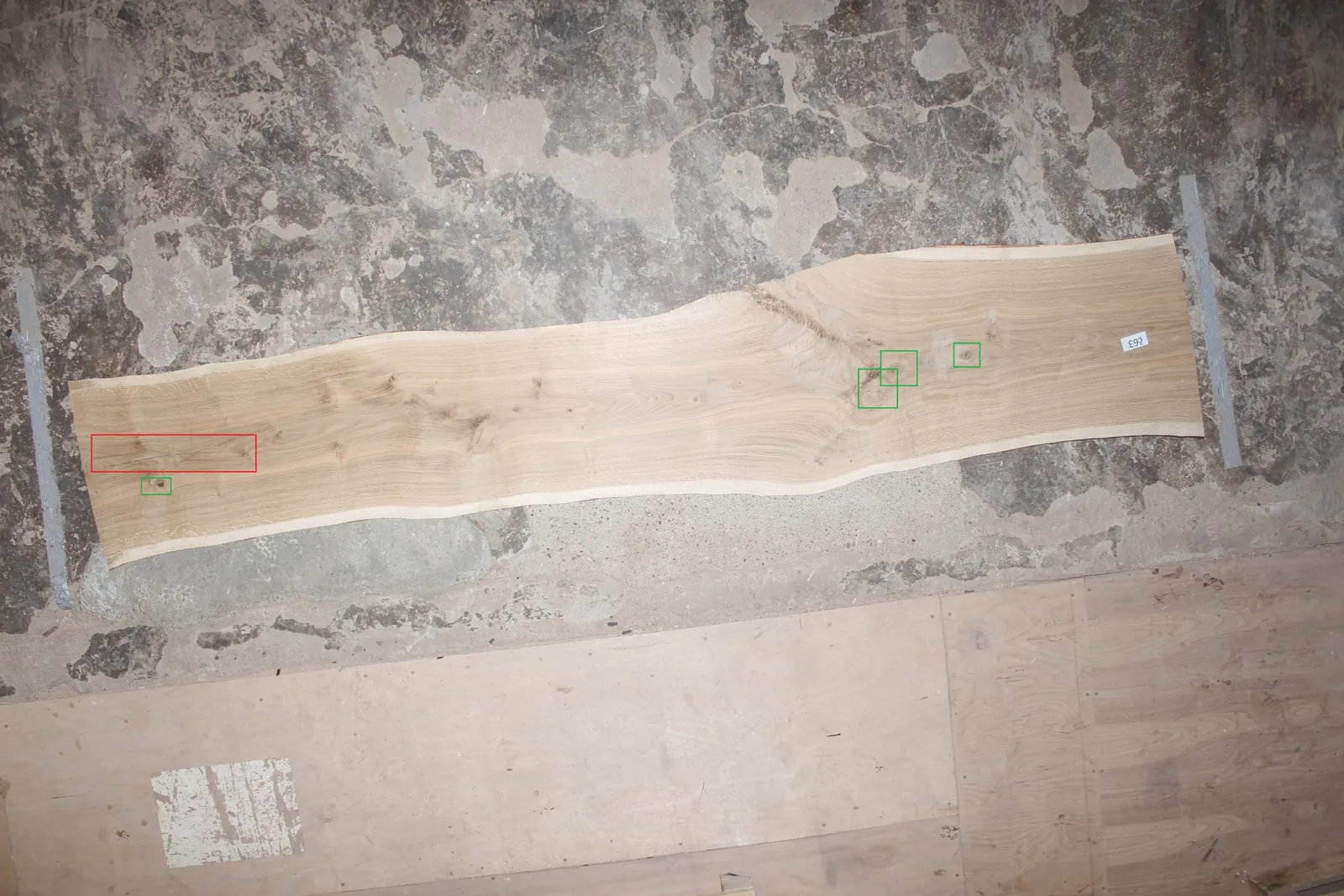
The hidden cost of manual wood grading: Sawmills typically leave 25-35% potential value unrealized through grading errors, underclassification, and missed premium yield optimization.
AI wood vision inspection is the timber grader’s partner. It analyzes every board’s defects, grain, color, and dimensional properties in milliseconds—consistently classifying timber into premium, standard, and utility grades. The result: 35-45% waste reduction, 25-30% increase in premium grade yield, and ROI in 4-6 months.
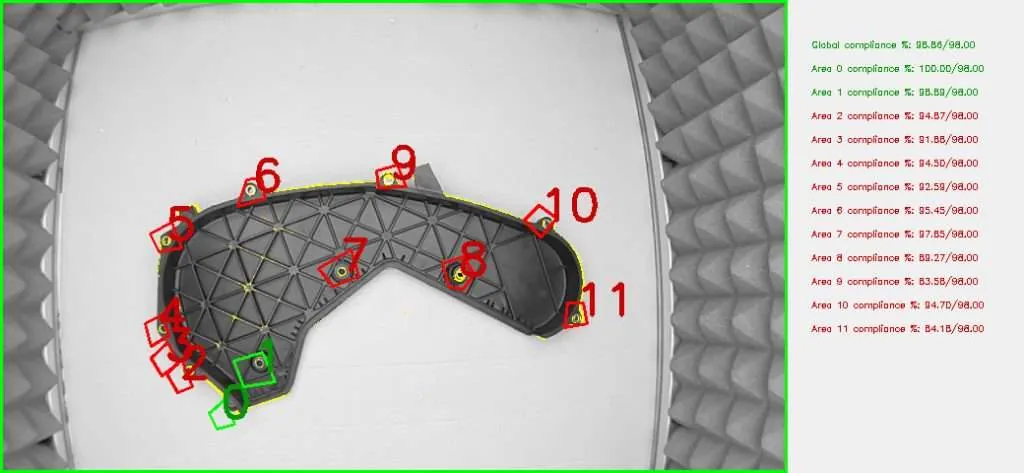
The Economics of Timber Grading Accuracy
How Grading Errors Cost Revenue
Underclassification: Premium board graded as standard = 30-40% margin loss per unit
Overclassification: Standard board graded as premium = customer reject, logistics cost, reputational damage
Inconsistency: Operator fatigue causes shift-to-shift grading variance = quality complaints
Missed optimization: No automated routing around defects = higher waste, lower yield
Slow throughput: Manual grading is bottleneck on high-speed lines = production delays
Real Economics: Mid-Size Sawmill
Production: 200,000 board feet/day. Current grading: manual (shift teams). Margin: 15-20% depending on grade mix.
Conservative Scenario: 30% of premium-grade boards currently misclassified as standard
Lost revenue: 200k BF × 30% premium potential × 35% margin difference = $21k/day lost margin. Over 250 production days/year = $5.25M annual revenue leak.
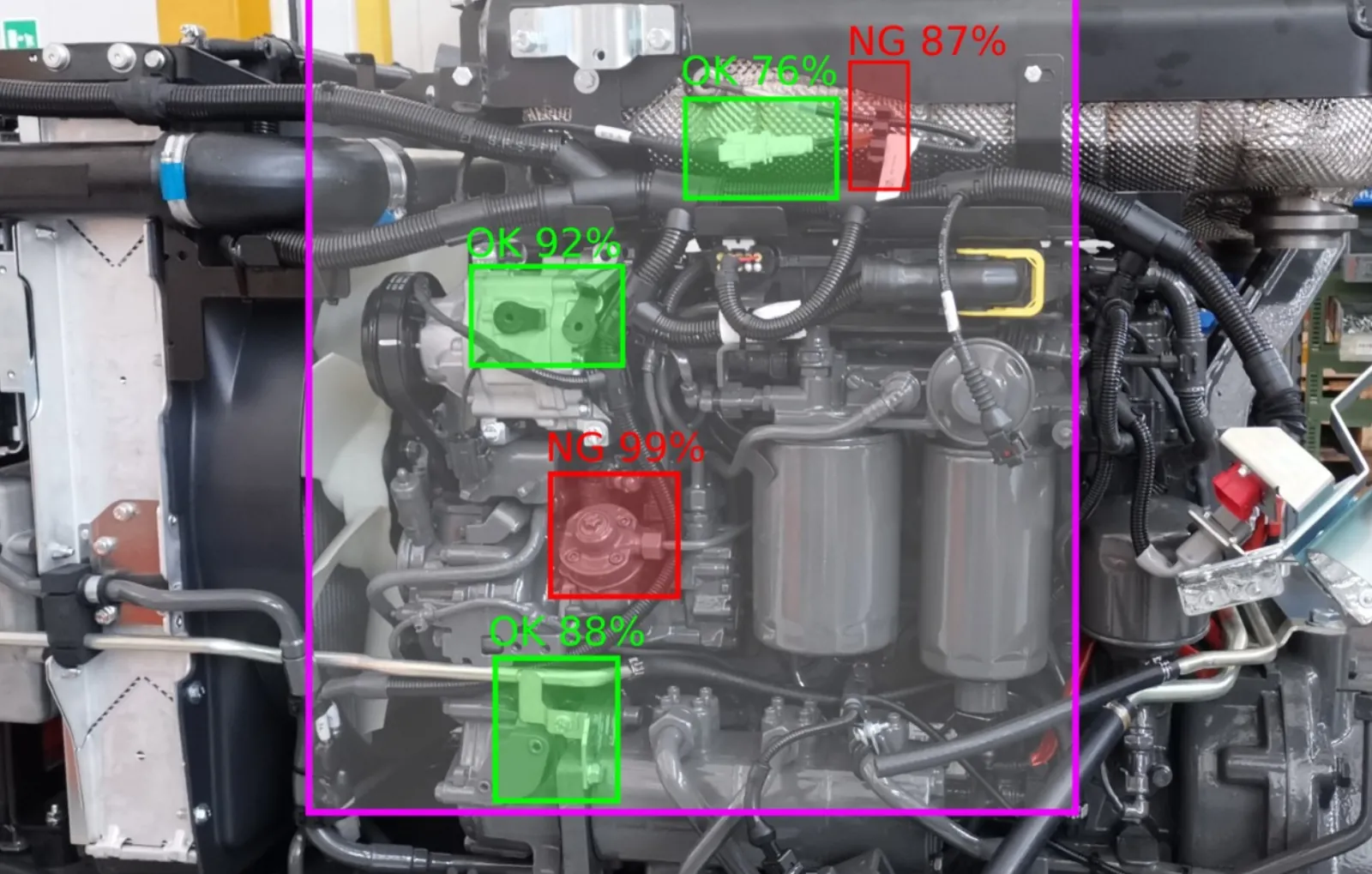
How AI Wood Vision Inspection Works
AI doesn’t replace graders. It amplifies them. Every board is analyzed across multiple dimensions—defects, grain orientation, color, dimensional compliance—and automatically sorted into grade streams.
The 5-Point Analysis Pipeline
Point 1: Surface Defect Mapping
Detects knots (size, location, type), cracks, splits, insect damage, discoloration. Each defect is mapped (type, size, location) for downstream optimization.
Point 2: Grain Pattern Analysis
Analyzes grain direction, texture, consistency. Premium aesthetic applications value tight, consistent grain; structural applications value grain orientation for load paths.
Point 3: Color & Finish Quality
Measures color uniformity, tone (sapwood vs heartwood), staining, UV damage. Critical for furniture & flooring premium grades.
Point 4: Dimensional Compliance
Verifies length, width, thickness, warpage, twist. Ensures spec compliance for downstream milling & customer requirements.
Point 5: Optimal Routing Decision
AI recommends grade + optimal cutting path to maximize yield around defects. Integrates with automated sorting gates for real-time routing.
Case Study: European Hardwood Sawmill
Sawmill: Premium Hardwood Processing
Annual Volume: 150,000 m³ (mixed oak, beech, walnut) | Grades: Premium (furniture, flooring), Standard (construction), Utility (pallets, pulp) | Historical Problem: 28% of actual premium boards graded as standard due to manual inconsistency
- 01
Premium Grade Yield
42% 58%
- 02
Waste Reduction
–38%
- 03
Customer Returns
3.2% 0.6%
- 04
ROI Timeline
~5 months
Detailed 6-Month Results
| Metric | Before | After | Impact |
|---|---|---|---|
| Premium Grade % | 42% | 58% | +38% |
| Grading Consistency | Operator-variant | 100% objective | Perfect |
| Waste % | 8.5% | 5.3% | –38% |
| Customer Returns/Month | 48 (grading issues) | 9 | –81% |
| Revenue Uplift (6mo) | — | €285k | Actual gain |
Investment & Financial Impact
CAPEX Year 1
System Investment
- 01
Multi-Spectral Camera + Lighting
€6k–10k
- 02
AI Software + Grading Library
€15k–22k
- 03
MES Integration + Sorting Gate Control
€5k–8k
- 04
Installation & Commissioning (1-2 days)
€3k–5k
- 05
Total Year 1
€29k–45k
Annual Financial Benefits (200k BF/day sawmill)
| Benefit | Annual Value |
|---|---|
| Premium Grade Yield Uplift (16% × 35% margin delta) | €420k |
| Waste Reduction (3.2% 5.3% savings) | €95k |
| Reduced Customer Returns (–81%) | €35k |
| Automated Sorting (1 FTE QC saved) | €45k |
| Total Annual Benefit | ~€595k |
ROI: 4–6 Months
Based on premium yield uplift + waste reduction. Highest-impact benefit is grading accuracy (16% more volume correctly classified as premium).
Manual vs. AI Grading: Comparison
| Aspect | Manual Grading | AI Vision Grading |
|---|---|---|
| Coverage | 100% (but inconsistent) | 100% (objective) |
| Grading Consistency | Shift-to-shift variance 15-25% | Zero variance |
| Throughput | Bottleneck (200-300 BF/min max) | Production speed (no slowdown) |
| Defect Detection | Misses internal defects | Catches all visible + patterns |
| Data & Traceability | None (manual notes) | Photo + grade + routing per board |
| Annual Cost (labor + rejects) | €120k–180k | €8k–12k (software/maintenance) |
Frequently Asked Questions
Q: Can AI distinguish between different wood species and their grade requirements?
A: Yes. We train the AI on your specific species mix and grading standards. Oak, beech, walnut, pine—each has different defect tolerances and premium criteria. System learns your custom grading matrix.
Q: How does it integrate with existing sorting gates?
A: Via MES/PLC interface. AI recommends grade (premium/standard/utility), system triggers the appropriate sorting gate. Works with pneumatic, hydraulic, or conveyor-based routing.
Q: What about color variation between logs of same species?
A: The AI learns your acceptable color ranges per grade. Oak sapwood is different from heartwood; AI classifies consistently. You define the color spec, AI enforces it.
Q: Can I audit the grading decisions (for FSC/PEFC certification)?
A: Absolutely. Every board: photo, timestamp, grade decision, confidence score, defect mapping. Digital traceability perfect for audits and customer justification.
Q: How long to onboard new grading standards?
A: 1-2 weeks. We collect reference samples of your new grades, AI relearns in 3-5 days. System retains memory of all previous standards.
Q: False positive rate for premium grade classification?
A: With proper setup: <2% misclassification (vs. 8-15% manual). AI is conservative on premium—when in doubt, classifies down. Your graders review borderline cases if needed.
Premium Grade Optimization
AI wood vision inspection unlocks 25-30% more premium yield. Reduce waste 35-45%, eliminate grading inconsistency, increase revenue €400k+/year. ROI 4-6 months.
Test it on your line. Before you spend a euro.
Send us 20 defective parts or high-res photos. We train a model on your parts and show you detection rate, false positives and cycle time before you sign anything.
- parts or photos
- 20
- parts or photos
- days to results
- 5-7
- days to results
- no commitment
- €0
- no commitment
Trusted on production lines at






Related applications
-
 Article
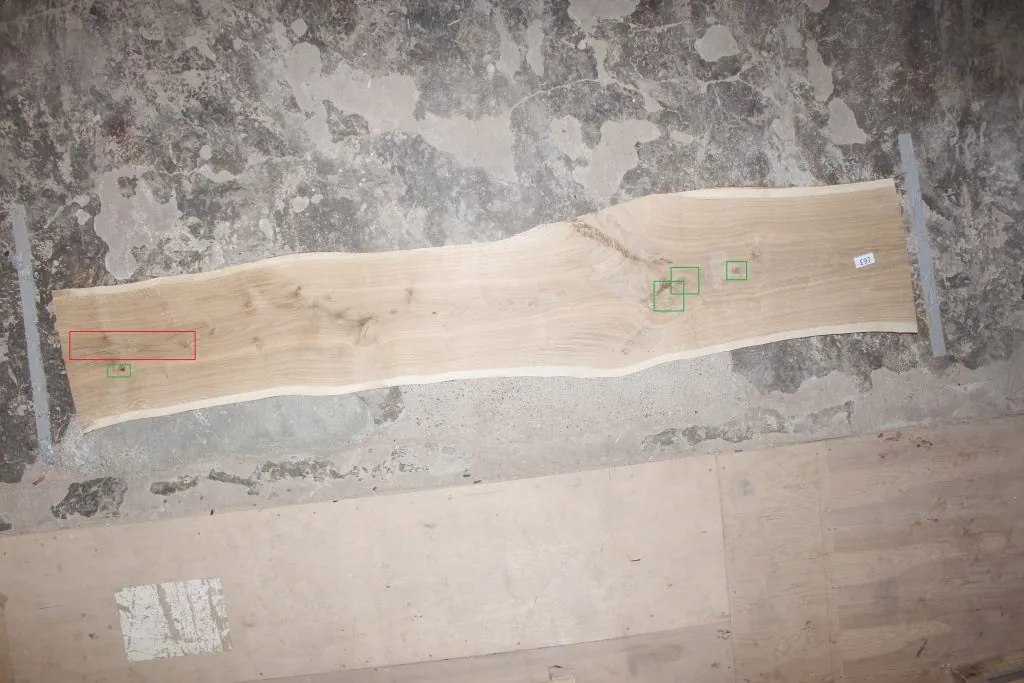
Computer Vision for Wood Inspection: Quality & Efficiency.
The wood industry demands precise quality control for appearance, strength, and durability. Traditional manual inspection is slow, subjective, and inconsistent across…
Read -
 Solution
Automated Weld Seam Inspection
Detect porosity, cracks, lack of penetration in real-time. Zero defective welds reach customers. Setup 2-3 days, ROI 3-4 months, AWS D1.1 compliant.
Read -
 Solution
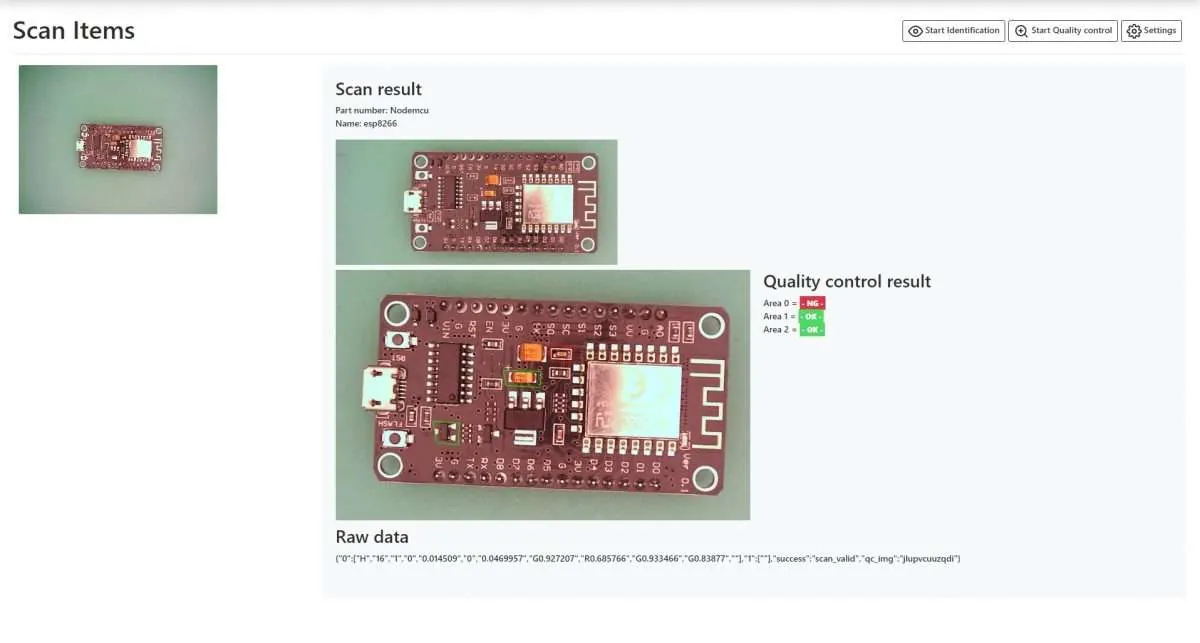
Computer Vision PCB Inspection: Automated Solder & Defect Detection
Detect solder bridges, component misalignment, and contamination in real-time. AI vision inspection catches 99% of defects that humans miss. Breakeven in 22 days.
Read