· 3 min read
Automated Testing of Medical Devices: Vision & AI.
The medical device industry demands the highest standards of quality and safety. Automated testing powered by computer vision and autonomous AI is transforming how manufacturers ensure device reliability, regulatory compliance, and patient safety — including the critical inspection of glass and plastic syringes.
What is automated medical device testing?
Automated testing uses sensors, imaging systems, and AI algorithms to perform comprehensive inspections and functional tests on medical devices with minimal human intervention. For manufacturers operating under FDA, CE, SEO Report and ISO frameworks, this means fast, consistent, auditable quality control throughout production — replacing slow and error-prone manual inspection with a system that improves continuously.
What computer vision does
Vision systems analyse images and video to detect defects, measure dimensions, and verify assembly correctness — at production speed and with objective consistency across every unit.
- 01
Surface defect detection
Identifying cracks, scratches, contamination, and material anomalies on device surfaces and components — including defects invisible under standard lighting.
- 02
Label, barcode, and packaging verification
Confirming correct label content, barcode readability, and packaging integrity — critical for serialisation, track-and-trace, and regulatory compliance.
- 03
Component placement and dimensional inspection
Checking component alignment and assembly correctness with micron-level precision — detecting assembly errors before devices are packaged and sterilised.
What autonomous AI adds
Autonomous AI takes inspection further — enabling systems to make intelligent decisions based on real-time data, adapt to product variations, and learn continuously from every inspection event. Computer vision for Blood Test analysis enhances diagnostics, automates results interpretation, and improves medical accuracy in labs in healthcare.
Dynamic parameter adjustment — adapting inspection thresholds automatically to handle product variations
Predictive failure detection — analysing historical and real-time data to identify failure patterns before defects occur
Workflow optimisation — maximising throughput and minimising downtime across inspection stations
Self-correcting learning — improving from anomalies to increase accuracy on every subsequent batch
Benefits of combining vision and AI
Enhanced accuracy — reduced human error and significantly higher defect detection rates
Faster time-to-market — accelerated testing cycles without compromising quality
Regulatory compliance — traceability and documentation for FDA, CE, ISO, and GMP audits
Cost efficiency — lower labour costs and reduced waste from defective products reaching late stages
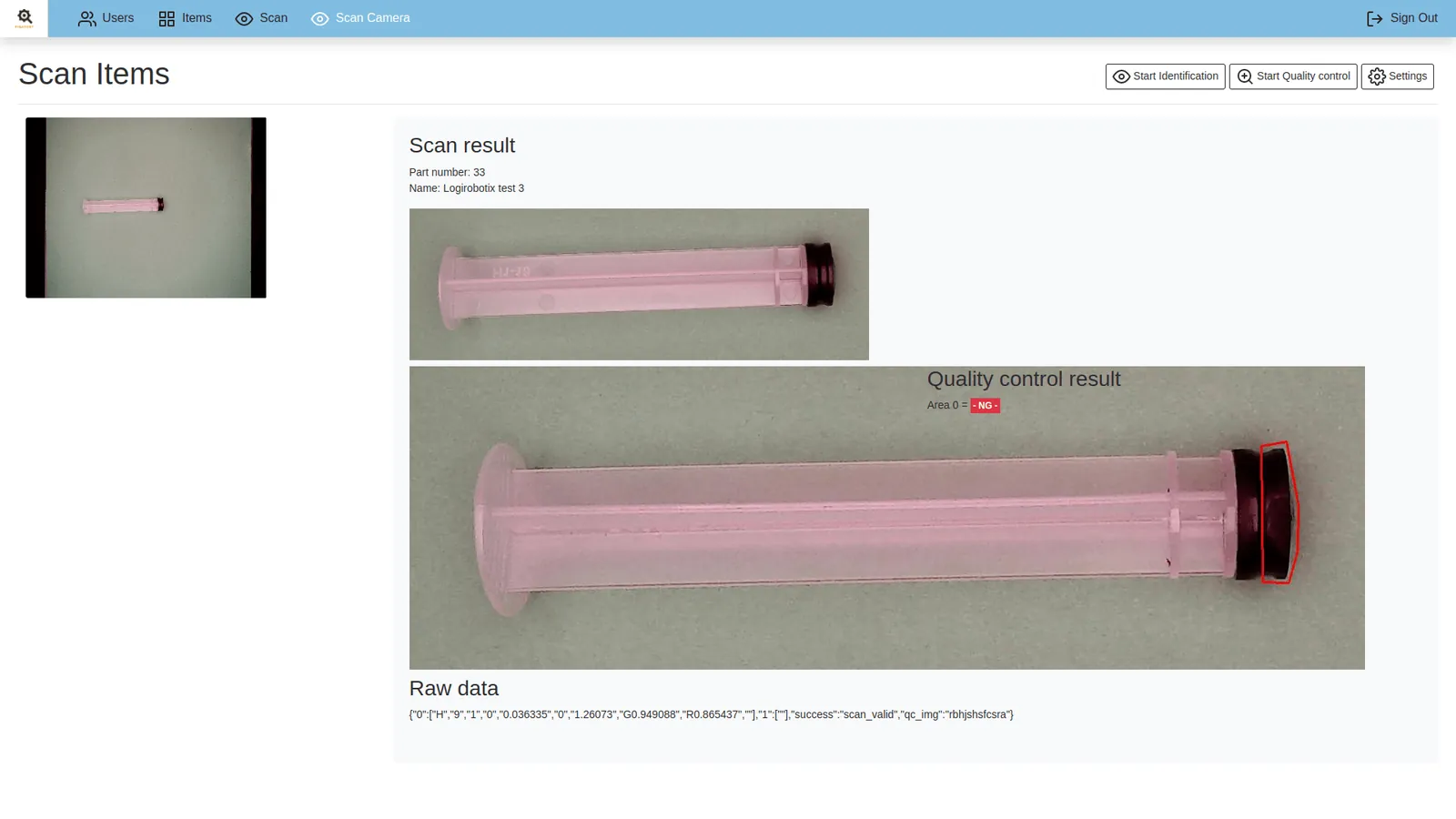
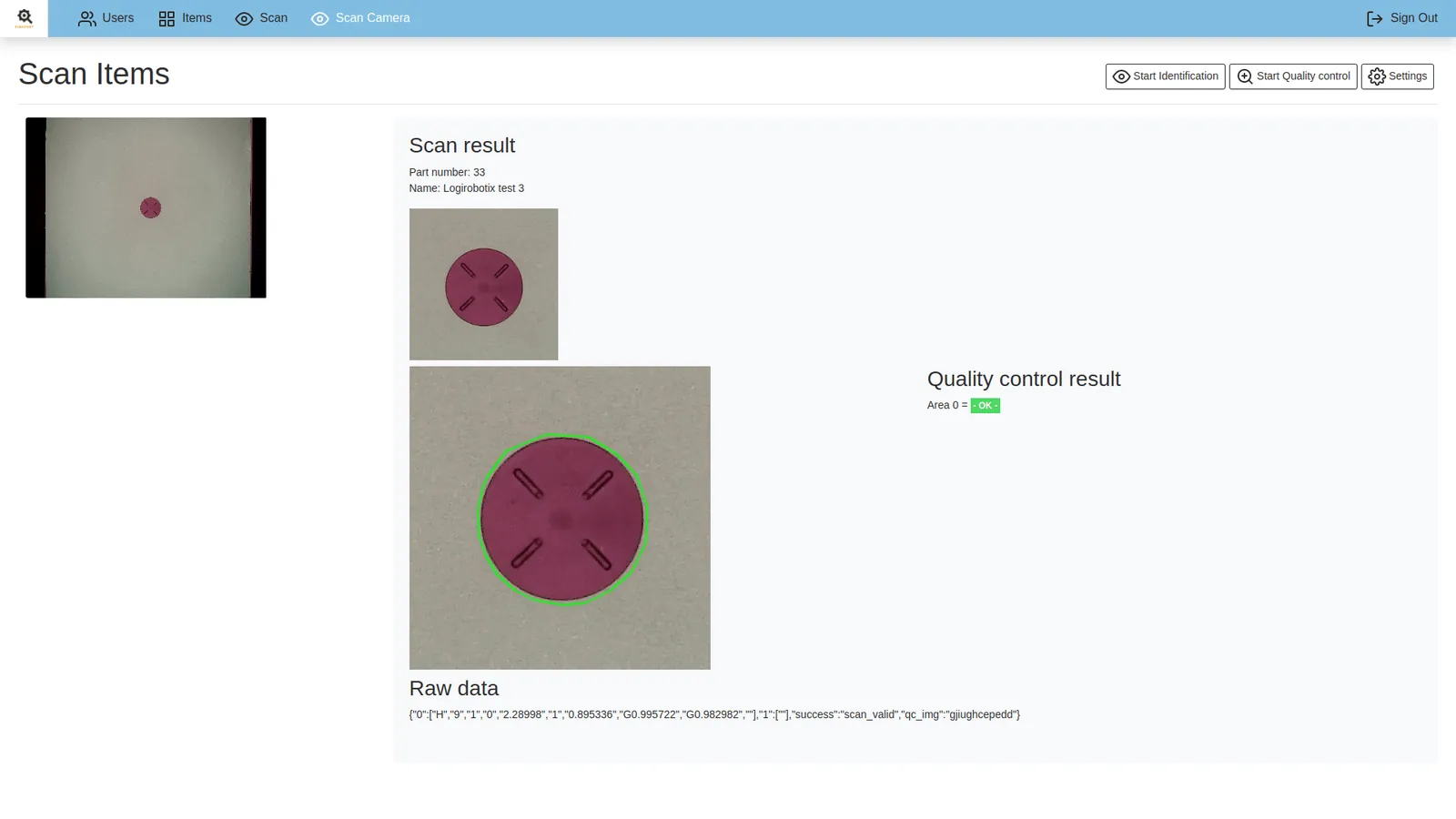
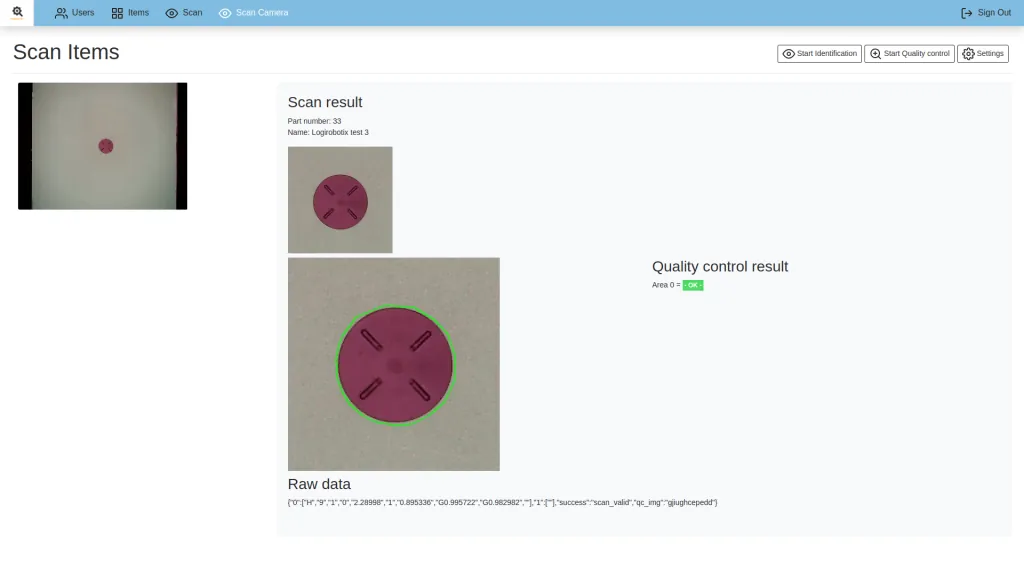
Logibox — Logirobotix’s automated inspection platform deployed for medical device quality control, combining high-resolution vision with AI-driven defect classification.
Syringe inspection: glass and plastic drug delivery devices
Syringes are critical components in safe drug delivery. Defects including cracks, particulates, deformation, or contamination can compromise drug integrity and patient safety. Glass and plastic syringes present different inspection challenges — both require 100% automated inspection before reaching fill-finish or packaging lines.
Inspection challenges by material
- 01
Glass syringes
Microscopic cracks, chips, and inclusions Surface quality and transparency for leachable contamination Precise dimensional tolerances for dosage accuracy
- 02
Plastic syringes
Moulding defects, flash, and warping Particulate contamination and barrel/plunger smoothness Material homogeneity, clarity, and sealing integrity
Automated inspection technologies
Vision systems — high-resolution cameras with advanced lighting detect surface defects, contamination, and dimensional anomalies across the full syringe surface
Laser profilometry — measures syringe geometry precisely, detecting deformation, warping, or out-of-spec dimensions that affect dosage accuracy
Computer vision and AI — real-time image analysis differentiating between acceptable variances and critical defects with high accuracy across both glass and plastic types
Automated leak testing — verifying sealing integrity of syringes to ensure sterility is maintained through to fill-finish and packaging
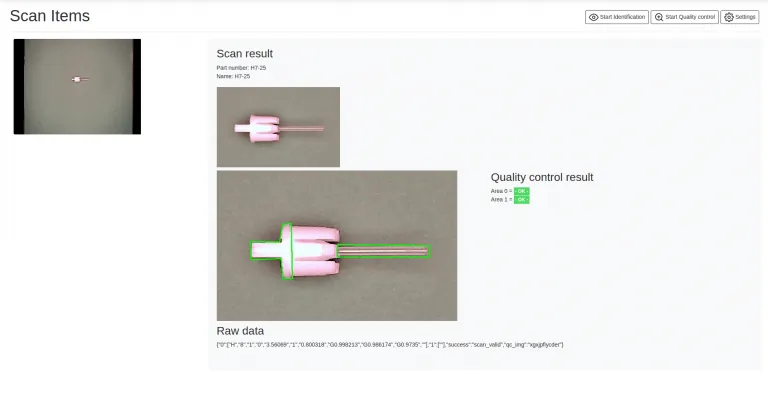
Automated vision inspection of syringe needle and barrel — detecting particulates, surface defects, and dimensional deviations at production speed under clean-room conditions.
Benefits of automated syringe inspection
Improved detection accuracy and consistency — eliminating sampling errors from manual inspection
Increased throughput — automated inspection without slowing production or fill-finish lines
Regulatory compliance — USP, ISO, and FDA inspection documentation built into the workflow
Data-driven quality control — full traceability and reporting for GMP audits and batch release
- 01
Key metrics
Inspection coverage 100% Regulatory FDA / CE / ISO Traceability Full batch Learning Continuous Deployment 1 day
- 02
Device defects detected
Surface cracks Particulates Deformation Label / barcode errors Assembly errors Seal failures
- 03
Explore more
Glass & vial inspection Pharma packaging vision Pricing plans
Related reading
More pharma and medical device quality control guides.
Guide · Pharma Computer Vision for Glass & Vial Inspection Read more
Guide · Pharma Vision Inspection for Pharmaceutical Packaging & Rubber Stoppers Read more
Guide · Labs Advanced Vision for Conventional & Fluorescence Microscopy Read more