· 3 min read
Vision Inspection for Pharmaceutical Packaging.
Pharmaceutical packaging is a critical safeguard for drug quality, safety, and regulatory compliance. Vision inspection systems ensure every package — and every rubber stopper — leaving the production line meets the highest GMP standards.
Why vision inspection matters in pharma packaging
Pharmaceutical packaging must protect products from contamination, ensure accurate dosing, and communicate essential information clearly. Even small defects — a misaligned label, a damaged seal, an unreadable batch number — can compromise patient safety, trigger costly product recalls, and cause regulatory action. Vision inspection provides automated, 100% inline inspection at production speed, catching every defect before products reach the market.
Key packaging inspection applications
- 01
Label verification
Correct placement, legibility, and regulatory compliance of all label content — including language, warnings, and dosage information.
- 02
Barcode and Data Matrix reading
Serialisation code accuracy and readability verified for full track-and-trace compliance with EU FMD and US DSCSA requirements.
- 03
Seal and closure inspection
Proper sealing detected in blister packs, bottles, vials, and syringes — ensuring product sterility is maintained through distribution.
- 04
Print quality and expiry verification
Expiry dates, batch numbers, and dosage instructions confirmed present and legible on every unit before leaving the line.
- 05
Component presence verification
All required packaging components confirmed in place — inserts, caps, safety seals, and secondary packaging elements.
Benefits of vision inspection
100% inline inspection — consistent quality across every unit at full production speed
Regulatory compliance — FDA, EMA, and GMP requirements met with full audit trail
Reduced waste — defects identified early, minimising product loss and rework cost
Full traceability — inspection data stored for audit, compliance, and continuous improvement
Rubber stopper inspection: ensuring sterility in injectable drugs
Rubber stoppers are a critical sealing component in pharmaceutical vials — preventing contamination and maintaining the sterility of injectable drugs. Even the smallest defect in a stopper can compromise product safety. Automated vision inspection ensures every stopper is perfect before it reaches the filling line.
Common defects detected
- Surface cuts, cracks & abrasions
- Embedded particles & fibres
- Flash and burrs from moulding
- Dimensional out-of-spec variations
- Deformation & surface damage
- Colour inconsistencies
How it works — 5 steps
- <strong>Feeding system</strong> — stoppers are fed onto a rotating inspection table or conveyor at production speed
- 1
- Feeding system — stoppers are fed onto a rotating inspection table or conveyor at production speed
- <strong>Multi-angle cameras</strong> — high-resolution cameras capture images of each stopper from multiple angles simultaneously
- 2
- Multi-angle cameras — high-resolution cameras capture images of each stopper from multiple angles simultaneously
- <strong>Specialised lighting</strong> — bright field and dark field illumination reveals surface defects and embedded particles
- 3
- Specialised lighting — bright field and dark field illumination reveals surface defects and embedded particles
- <strong>AI image analysis</strong> — algorithms classify defects, identify acceptable units, and trigger automatic rejection of defective stoppers
- 4
- AI image analysis — algorithms classify defects, identify acceptable units, and trigger automatic rejection of defective stoppers
- <strong>Data logging</strong> — inspection data stored for GMP documentation, batch traceability, and regulatory audit
- 5
- Data logging — inspection data stored for GMP documentation, batch traceability, and regulatory audit
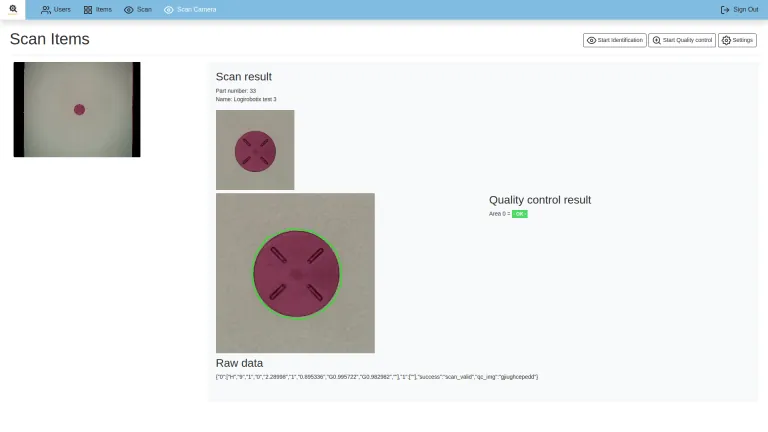
High-speed machine vision inspecting pharmaceutical rubber stoppers — surface defects, contamination, and dimensional accuracy verified under clean-room conditions.
Benefits of automated rubber stopper inspection
100% quality control — every stopper inspected, eliminating sampling errors and missed defects
High-speed inspection — no slowing of production lines, inline with filling and assembly
Full regulatory compliance — FDA, EMA, and GMP inspection documentation built in
Reduced contamination risk — particles and seal failures caught before drugs are filled
Cost savings — prevents waste and eliminates costly recalls from stopper-related failures
Scalable — adapts to different stopper sizes, materials, and production volumes
- 01
Key metrics
Inspection coverage 100% Regulatory FDA / EMA GMP traceability Full batch Throughput impact Zero Deployment 1 day
- 02
Packaging defects
Label errors Seal failures Barcode errors Print defects Missing components
- 03
Explore more
Glass & vial inspection Medical device testing Pricing plans
Related reading
More pharma and manufacturing AI vision guides.
Guide · Pharma Computer Vision for Glass & Vial Inspection Read more
Guide · Medical Automated Testing of Medical Devices Read more

Guide · Manufacturing Automated Weld Seam Inspection Read more