Robot Cybersecurity & Machine Vision: Protecting AI-Powered QC
As AI-powered quality control systems move onto factory floors, they’ve become targets. Hackers can poison models, intercept defect data, or trigger false rejects that halt production. This guide covers the real threats to machine vision systems and how to secure them from day one.
2026 · Guide · Cybersecurity · Industrial IoT · 10 min read
- Cybersecurity
- Machine vision
- IoT security
- FDA compliance
- Data privacy
Why machine vision security matters now
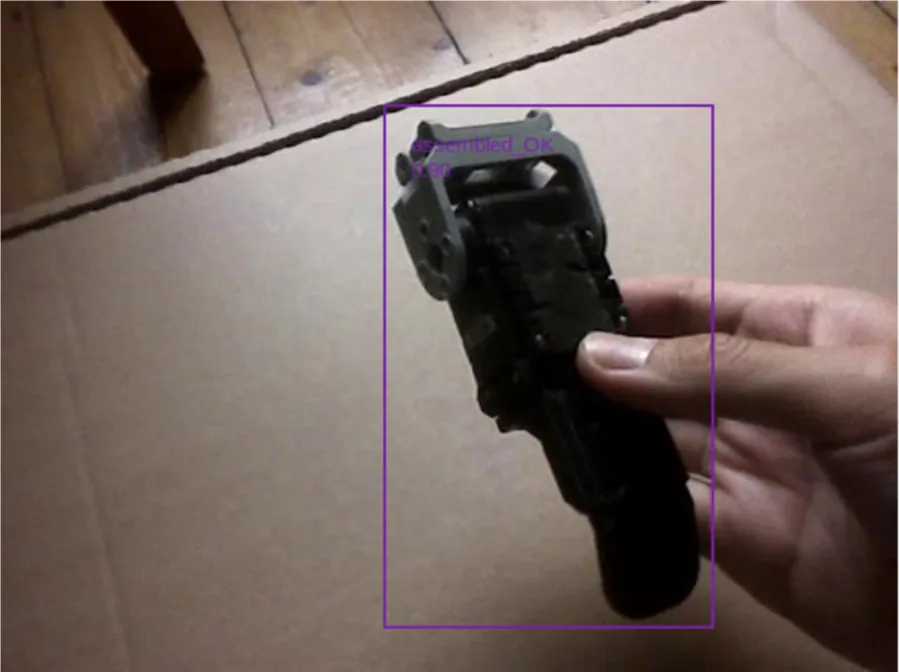
Traditional industrial cameras—locked in factories, connected only to local PLCs—weren’t targets. But modern machine vision systems are fundamentally different. They’re connected to WiFi, cloud platforms, and ERPs. They run AI models that can be attacked. They store production images revealing process secrets. And they control pass/reject decisions that stop lines worth millions per hour.
The risk is real
In 2024, cybersecurity vulnerabilities in industrial IoT and vision systems jumped 41% year-over-year (ICS-CERT). A single compromised vision system can stop production, degrade quality, steal IP, and violate GDPR with fines up to €20M.
The attackers aren’t sophisticated—they’re already scanning for exposed systems using Shodan and Censys. Default credentials, unencrypted data, and unpatched firmware are entry points for ransomware gangs, competitors, and state actors targeting defense and automotive supply chains.
Four categories of machine vision threats
- 01
Network attacks
Man-in-the-middle intercepts pass/reject signals. Attackers alter QC decisions or steal images in transit. Risk: HIGH if data isn’t encrypted
- 02
AI/Model poisoning
Attackers inject malicious training data or feed adversarial examples that fool the AI into accepting defects. Risk: MEDIUM—effective but requires model knowledge
- 03
Data privacy breaches
Production images leak worker faces, facility layouts, and trade secrets. GDPR fines: up to €20M. Risk: VERY HIGH—regulatory + IP loss
- 04
Supply chain compromise
Vendors’ unpatched software, counterfeit hardware, or zero-day exploits expose the entire line. Risk: MEDIUM to HIGH depending on supplier vetting
- 01
GDPR (Europe)
If images capture worker faces or facility layouts: €20M fine or 4% of annual revenue for data breaches. Requires DPIA (Data Protection Impact Assessment), privacy by design, encryption, and incident response.
- 02
FDA & GMP (Pharma/Medical)
Vision QC data must be validated, audit-trail compliant (21 CFR Part 11), tamper-evident, and reproducible. Non-compliance results in product seizures and warning letters.
- 03
ISO 27001 & NIST
Recommended/required for manufacturing: risk assessment, access control, encryption standards, incident response, and regular audits. NIST is increasingly mandated for government contracts.
How to secure machine vision: 5 layers
1. Secure Deployment Architecture
Air-gap when possible. If your vision system doesn’t need live dashboards, keep it offline. If it must connect, use TLS 1.3+ encryption for all traffic, segment the network with firewalls, and encrypt data at rest with AES-256. Treat the vision system as untrusted.
2. Authentication & Access Control
Change all default credentials immediately. Require MFA for remote access. Implement role-based access: operators view only, maintenance can retrain models, admins manage settings. Rotate API keys quarterly.
3. AI/Model Security
Validate training data. Don’t allow retraining on raw production images. Monitor model accuracy continuously for sudden drops (sign of poisoning). Keep model versions immutable and signed. Update frameworks monthly.
4. Data Privacy & Compliance
Minimize data collection: store only what’s needed for QC. Set auto-deletion policies (e.g., purge images after 90 days). Anonymize production data before analytics. Document retention policies for audits.
4. Monitoring & Maintenance
Log everything: logins, model updates, QC decisions, config changes. Send logs to a centralized SIEM. Set alerts for suspicious patterns. Subscribe to vendor security bulletins. Test patches on staging before production. Annual penetration testing. Quarterly network scans.
Security checklist for manufacturers
- Conduct cybersecurity risk assessment for the vision system
- Map all data flows: where does production data go?
- Change all default credentials and enable MFA
- Enable encryption in transit (TLS 1.3+) and at rest (AES-256)
- Set up centralized logging and SIEM integration
- Establish automated malware scanning
- Create an incident response plan and test it annually
- Document data retention and deletion policies
- Schedule annual penetration testing
- Train staff on security basics (no default passwords, phishing awareness)
- Assess all vendors’ security posture
- Plan monthly software/firmware patching
- Document system for audits (FDA, ISO, GDPR)
- Secure physical access to devices; use tamper-evident seals
How PIQAPART addresses security by design
- 01
Architecture
Local-first: AI runs on the iPhone, not in the cloud. Your data never leaves the factory unless you explicitly send it. Benefit No cloud breach risk. Air-gap option for maximum isolation on regulated lines.
- 02
Encryption
TLS 1.3 for all communication. AES-256 at rest. All data encrypted by default, not as an add-on. Benefit Man-in-the-middle attacks neutralized. Data breach impact minimized even if accessed.
- 03
Audit Trails
Every pass/reject, model update, config change logged with timestamp and user attribution. Immutable logs. Benefit FDA 21 CFR Part 11 compliant. ISO 27001 audit-ready. Detect tampering instantly.
- 04
Updates
Monthly security patches via app store. No waiting for vendor support. Updates automatic. Benefit Zero-day exposure minimized. Stay ahead of threats without manual intervention.
Security built in, not bolted on
Local processing keeps data on-premises — no cloud platform to breach
Air-gap deployment option for maximum isolation on FDA/GMP lines
End-to-end encryption — all data encrypted in transit and at rest
Immutable audit trails for compliance: FDA, ISO 27001, GDPR, NIST
Monthly security patches — automatic app updates, no delay
No proprietary lock-in — export your data anytime via CSV, JSON, or API
- 01
Risk summary
IoT security growth +41% GDPR fine max €20M Downtime cost/hr €10k+ Threat actors 4+ types Time to breach minutes
- 02
Resources
Related reading
More on AI quality control, compliance, and manufacturing security.
Solution · QC PIQAPART: AI Quality Control from any iPhone Learn more
Guide · Assembly Vision Systems for Manual Assembly QC Read more
Platform · Documentation PIQAPART: AI Documentation Platform Explore
Secure AI quality control from day one.
PIQAPART is built for compliance: local processing, end-to-end encryption, immutable audit trails, and FDA/ISO-ready. Deploy on your line with zero security compromise.
- parts or photos
- 20
- parts or photos
- days to results
- 5-7
- days to results
- no commitment
- €0
- no commitment
Trusted on production lines at
Related applications
-
 Article
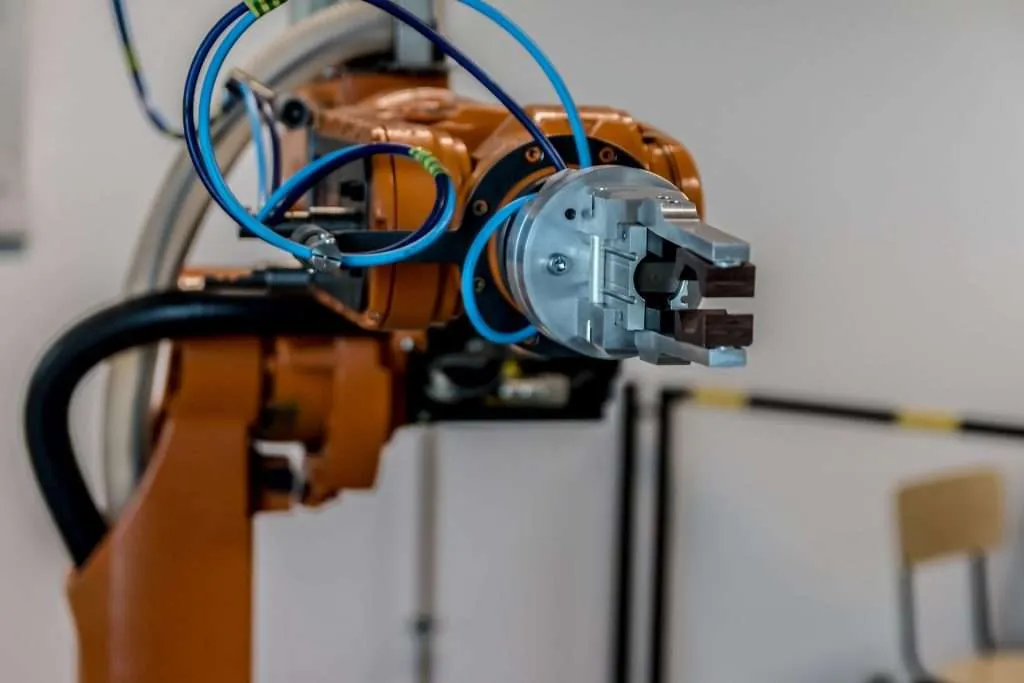
Robot Cybersecurity in the Age of Autonomous AI.
Robots are no longer confined to factory floors — they operate in hospitals, warehouses, and infrastructure. A cyberattack on a robot causes both digital and physical…
Read - Solution
Cobot Vision System: How AI-Powered Robot Vision Transforms Manufacturing
Discover how collaborative robots with integrated vision systems see, inspect, and handle complex manufacturing tasks. From quality control to autonomous pick-and-place,…
Read - Article
Computer Vision, AI & Robotics: The New Automation.
The convergence of computer vision, autonomous AI, and robotics is driving a new era of intelligent automation. By combining the ability to see, think independently, and…
Read