· 2 min read
Vision Systems for Photovoltaic Panel Inspection.
As solar adoption accelerates, maintaining PV panel quality and performance is critical. Micro-cracks, soiling, and manufacturing inconsistencies reduce efficiency and lifespan. AI vision systems deliver fast, accurate, automated inspection — both in manufacturing and in the field.
Why vision systems are essential for PV panel inspection
A single micro-crack in a solar cell can reduce the output of an entire panel by causing current mismatch between cells. Hotspots caused by shading or cell damage can degrade panel efficiency, shorten lifespan, and in severe cases create fire risks. Traditional manual inspection cannot detect these defects reliably at production scale or identify them in installed field arrays. AI vision — combined with infrared imaging — catches defects that are invisible to the eye, at the speed manufacturing requires.
- 01
Early defect detection
Micro-cracks, cell misalignments, hotspots, and manufacturing faults identified before panels are shipped or deployed — preventing field failures and warranty claims.
- 02
Consistent quality assurance
Automated inspection removes subjectivity and human error — ensuring uniform quality standards across high-volume production batches.
- 03
Speed and scalability
Real-time image processing supports high-throughput inline inspection on manufacturing lines and rapid in-field maintenance scheduling.
- 04
Data traceability
Digital inspection records enabling quality tracking, warranty claim documentation, and predictive maintenance scheduling across deployed installations.
Key inspection applications
Cell crack and chip detection — minute fractures and damages in solar cells affecting electrical performance
Hotspot detection — localised overheating areas that degrade efficiency and create safety risks
Soiling and contamination — surface cleanliness assessment to optimise cleaning schedules and maximise output
Solder joint inspection — integrity of electrical connections between cells verified for long-term reliability
Alignment and dimensional verification — correct cell placement and panel dimensions meeting design specifications
Encapsulant and glass inspection — delamination, bubbles, and surface defects in protective layers
Technologies used
High-resolution optical cameras with multispectral imaging — detecting surface defects, discolouration, and soiling patterns across the full panel surface.
Thermographic infrared imaging — detecting hotspots, cell temperature anomalies, and bypass diode failures invisible to optical cameras.
AI and deep learning trained on PV defect datasets — robust identification of micro-cracks, delamination, and performance-affecting defects across different panel types.
MES and maintenance platform integration — inspection data feeding production control and field maintenance scheduling systems.
Benefits for solar manufacturers and operators
Improved panel efficiency and reliability through comprehensive defect detection before deployment
Enhanced production throughput — 100% inline inspection without slowing manufacturing lines
Proactive field maintenance — real-time inspection data enabling targeted cleaning and repair scheduling
Greater customer confidence — consistent product quality backed by digital inspection records
Reduced warranty claims — defects caught in manufacturing, not discovered by end customers
Extended panel lifespan — early hotspot and degradation detection preventing accelerated ageing
- 01
Key metrics
Inspection coverage 100% Consistency 100% Imaging modes Optical + IR Deployment 1 day MES integration Included
- 02
Defects detected
Micro-cracks Hotspots Soiling Solder defects Delamination Misalignment
- 03
Explore more
Related reading
More AI vision guides across energy and manufacturing.
Guide · Energy
Vision Systems for Battery Inspection
Read more
Guide · Manufacturing Automated Weld Seam Inspection Read more
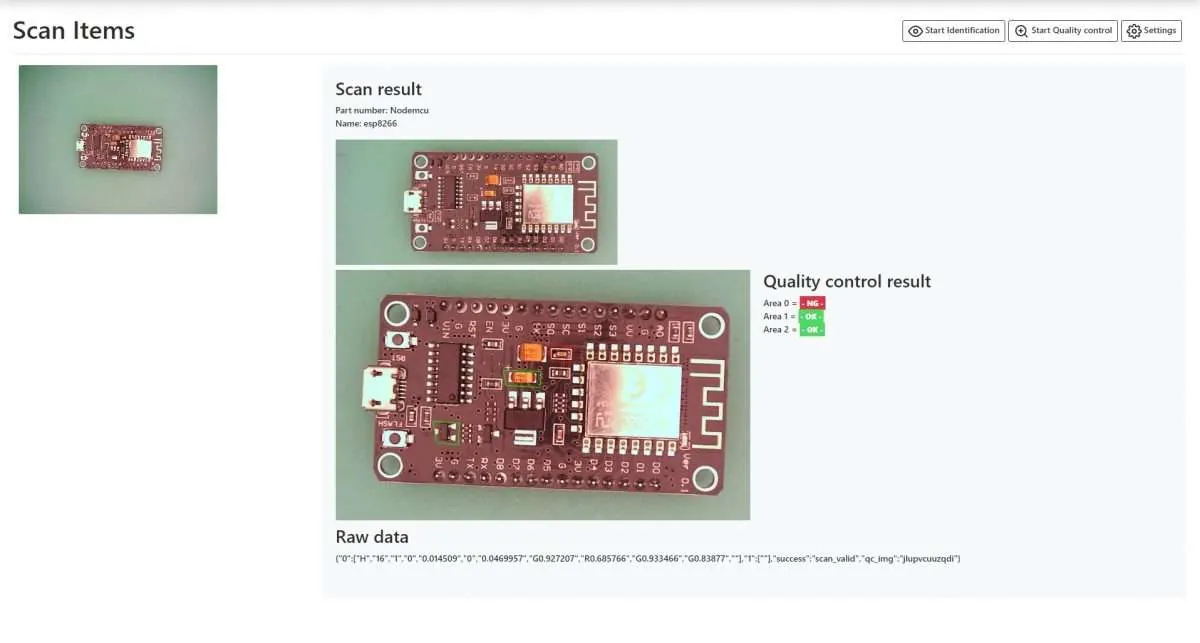
Case Study · Electronics Computer Vision for Micro Components & PCBs Read more